
What Is Dry Needling?
A Beginner's Guide to This Powerful Pain Relief Technique
If you’ve been dealing with stubborn muscle pain, tightness, or an injury that just doesn’t seem to improve, you may have heard your physical therapist mention dry needling. The idea of needles can sound intimidating at first, but many patients are surprised by how quick, tolerable, and effective the treatment can be.
Dry needling is one tool that can help reduce pain, improve movement, and support better muscle function. It is often used alongside exercise, mobility work, and other hands-on treatment to help patients feel and move better.
What Is Dry Needling?
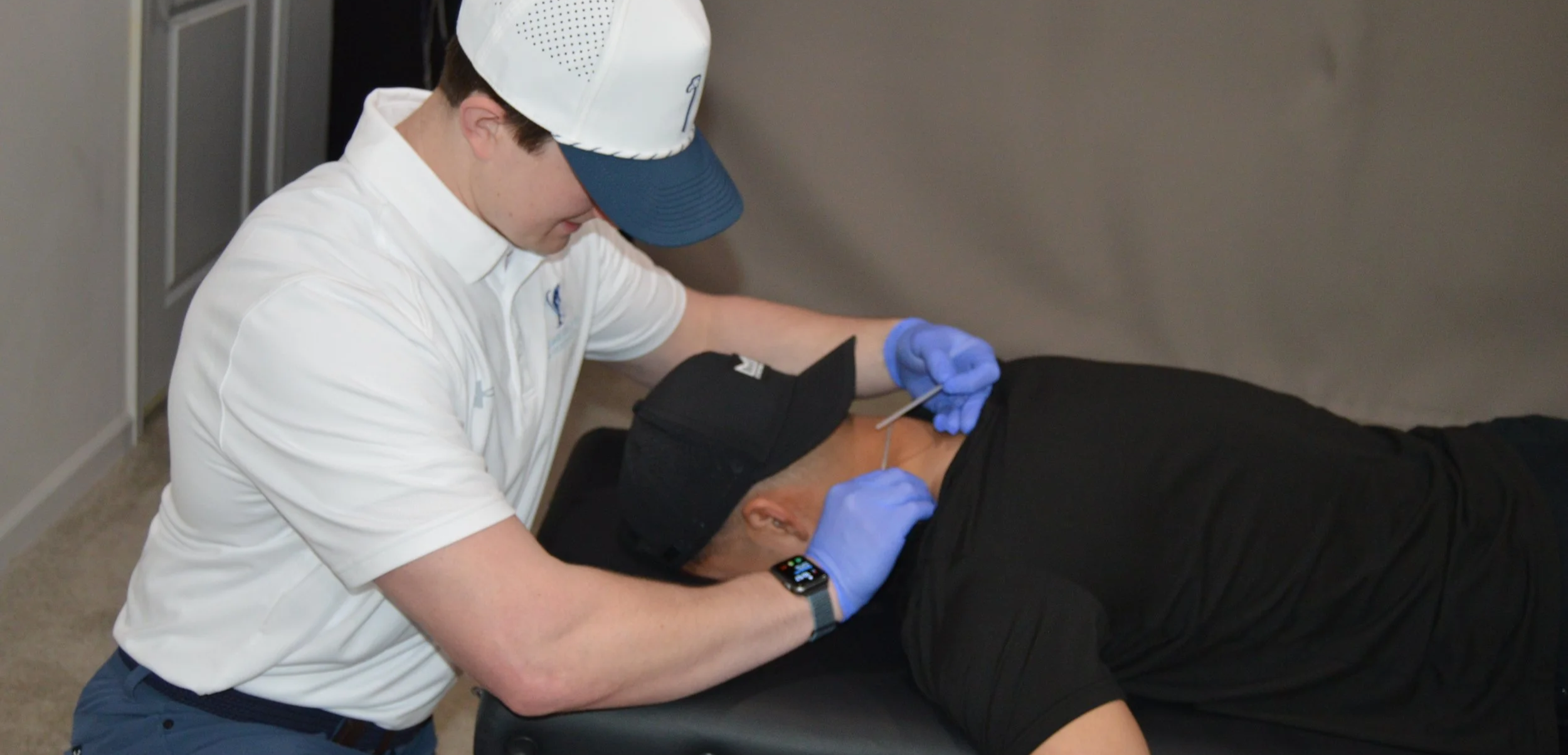
Dry needling is a treatment technique in which a trained practitioner inserts a thin, sterile needle into specific areas of muscle or connective tissue. The goal is to reduce pain, decrease muscle tension, and help the body move more normally.
The word “dry” simply means that nothing is injected. The needle itself is what creates the therapeutic effect.
Most patients are surprised by how fine the needles are and how brief the sensation is. The treatment is typically much less uncomfortable than people expect.
Dry needling often focuses on myofascial trigger points — those tight, tender spots in a muscle that can cause pain locally or refer discomfort to other areas. If you’ve ever pressed on a sore area and felt pain spread somewhere else, that may have been a trigger point.
Dry Needling vs. Acupuncture
People often confuse dry needling with acupuncture because both use thin needles, but they are not the same.
Acupuncture comes from Traditional Chinese Medicine and uses specific points on the body based on that system of care. It is often used for a wide range of concerns, including pain, stress, sleep, and general wellness.
Dry needling is based on modern anatomy and musculoskeletal assessment. The practitioner uses the needle to target muscles and soft tissue that are contributing to pain, stiffness, or dysfunction.
Both can be helpful, but they are different treatments with different training backgrounds and clinical goals.
How Does Dry Needling Actually Work?
When a dry needle is inserted into a trigger point, a few things happen:
The Local Twitch Response. You may feel a brief, involuntary muscle twitch — this is actually a good sign. It indicates the needle has found the trigger point. This twitch response helps "reset" the contracted muscle fibers and release the tension that's been building.
Increased Blood Flow. The needle insertion stimulates circulation to the area. Trigger points are often hypoxic (low in oxygen), and improved blood flow helps flush out the waste products that contribute to pain and helps deliver nutrients needed for healing.
Nervous System Reset. Dry needling influences how your nervous system processes pain signals. By stimulating the tissue, it can interrupt the cycle of chronic pain and muscle guarding that keeps many people stuck.
Connective Tissue Release. The needle also affects the fascia — the connective tissue that surrounds and runs through your muscles — helping to restore mobility and reduce stiffness.
Improving Muscle Function. Dry needling may help a muscle contract and relax more efficiently, which can improve force output, coordination, and overall movement quality after treatment.
The result is a muscle that can finally relax, a nervous system that can calm down, and tissue that can begin to heal.
An example of a muscle twitch response. This video is not a reflection of dry needling best practice.
What Conditions Can Dry Needling Help?
Dry needling is versatile. It's used to treat a wide range of musculoskeletal conditions, including:
Neck and upper back pain
Low back pain
Shoulder pain
Headaches and migraines
Hip and glute pain
Knee pain
Plantar fasciitis and foot pain
Tennis elbow and golfer's elbow
Fibromyalgia and widespread muscle pain
Sports injuries and overuse conditions
Post-surgical rehabilitation
It can be especially useful when pain has a muscular or myofascial component, which is very common in active people and athletes.
What Does a Dry Needling Session Feel Like?
Most people find dry needling more tolerable than they expected.
During treatment — you may feel a brief pinch as the needle enters the skin. When the needle reaches an irritated trigger point, you might feel a quick twitch, a deep ache, or a cramping sensation that passes quickly. Many patients describe it as unusual rather than painful.
After treatment — some soreness is common for 24 to 48 hours, similar to how you might feel after a hard workout. This is a normal response and usually fades quickly. Many people also notice improved mobility, reduced pain, or easier movement soon after treatment.
Session length — depends on your needs, the areas being treated, and how much you can comfortably tolerate. Your practitioner will tailor the visit based on your goals and the response your body gives that day.
Is Dry Needling Safe?
Yes, when performed by a properly trained practitioner, dry needling has a strong safety profile.
The needles are sterile and single-use. The most common side effects are temporary soreness, mild bruising, or brief fatigue. Serious complications are rare, especially when treatment is performed by someone with advanced training and appropriate clinical judgment.
Because dry needling regulations vary by state, it’s important to work with a provider who has completed recognized training and is allowed to perform the technique in your area.
Why It Works Best With Rehab
Dry needling is most effective when it is part of a bigger plan.
Think of it as a way to reduce pain, improve mobility, and create a better window for rehab. That window is where the long-term change happens — through exercise, movement retraining, mobility work, and the right progression back to your normal activity.
In other words, dry needling can help unlock the problem, but the real progress comes from what you do with that opportunity.
Is Dry Needling Right for You?
If you’ve been dealing with persistent pain, tight muscles, or a stubborn injury that has not responded the way you hoped, dry needling may be worth considering.
A good provider will evaluate what is going on, explain whether dry needling makes sense for you, and tailor treatment to your body, your goals, and your tolerance.
Ready to Find Out If Dry Needling Is Right for You?
If you've been dealing with persistent pain, muscle tightness, or a stubborn injury, dry needling may be a missing piece of your recovery. The best way to know for sure is to come in for an evaluation. We'll assess what's going on, explain exactly what treatment might look like, and answer any questions you have.
Book your appointment today — and take the first step toward feeling better.
